Civil Rights
Movements, leaders, victories and the continuing fight for equality.

Explore the people, places, events, achievements, struggles and stories that shaped our journey.
Movements, leaders, victories and the continuing fight for equality.
Innovation, patents, science, technology and world-changing contributions.
Pioneers, champions, Negro Leagues, records, activism and excellence.
Meet the people whose lives, choices and achievements shaped the journey.
Black towns, communities, institutions and places where history happened.
Moments that changed communities, movements, institutions and the nation.
In August 1908, a white mob attacked Springfield, Illinois’s Black community, destroying homes and businesses and lynching two Black men. National outrage over the violence helped spur the movement that created the NAACP the following year.
MORE →Reflects the personal views, recollections, and perspective of the author, Mike Davis.
This is a personal recollection on the Move fire on May 13, 1985

In probability theory and statistics, a collection of random variables is independent and identically distributed (i.i.d., iid, or IID) if each random variable has the same probability distribution as the others and all are mutually independent.[1] IID was first defined in statistics and finds application in many fields, such as data mining and signal processing.
Statistics commonly deals with random samples. A random sample can be thought of as a set of objects that are chosen randomly. More formally, it is "a sequence of independent, identically distributed (IID) random data points."
In other words, the terms random sample and IID are synonymous. In statistics, "random sample" is the typical terminology, but in probability, it is more common to say "IID."
Independent and identically distributed random variables are often used as an assumption, which tends to simplify the underlying mathematics. In practical applications of statistical modeling, however, this assumption may or may not be realistic.[3]
The i.i.d. assumption is also used in the central limit theorem, which states that the probability distribution of the sum (or average) of i.i.d. variables with finite variance approaches a normal distribution.[4]
The i.i.d. assumption frequently arises in the context of sequences of random variables. Then, "independent and identically distributed" implies that an element in the sequence is independent of the random variables that came before it. In this way, an i.i.d. sequence is different from a Markov sequence, where the probability distribution for the nth random variable is a function of the previous random variable in the sequence (for a first-order Markov sequence). An i.i.d. sequence does not imply the probabilities for all elements of the sample space or event space must be the same.[5] For example, repeated throws of loaded dice will produce a sequence that is i.i.d., despite the outcomes being biased.
In signal processing and image processing, the notion of transformation to i.i.d. implies two specifications, the "i.d." part and the "i." part:
i.d. – The signal level must be balanced on the time axis.
i. – The signal spectrum must be flattened, i.e. transformed by filtering (such as deconvolution) to a white noise signal (i.e., a signal where all frequencies are equally present).
Suppose that the random variables and are defined to assume values in . Let and be the cumulative distribution functions of and , respectively, and denote their joint cumulative distribution function by .
Two random variables and are independent if and only if for all . (For the simpler case of events, two events and are independent if and only if , see also Independence (probability theory) § Two random variables.)
Two random variables and are identically distributed if and only if for all .[6]
Two random variables and are i.i.d. if they are independent and identically distributed, i.e. if and only if
The definition extends naturally to more than two random variables. We say that random variables are i.i.d. if they are independent (see further Independence (probability theory) § More than two random variables) and identically distributed, i.e. if and only if
where denotes the joint cumulative distribution function of .
A sequence of outcomes of spins of a fair or unfair roulette wheel is i.i.d. One implication of this is that if the roulette ball lands on "red", for example, 20 times in a row, the next spin is no more or less likely to be "black" than on any other spin (see the gambler's fallacy).
Toss a coin 10 times and write down the results into variables .
Such a sequence of i.i.d. variables is also called a Bernoulli process.
Roll a die 10 times and save the results into variables .
Choose a card from a standard deck of cards containing 52 cards, then place the card back in the deck. Repeat this 52 times. Observe when a king appears.
Many results that were first proven under the assumption that the random variables are i.i.d. have been shown to be true even under a weaker distributional assumption.
The most general notion which shares the main properties of i.i.d. variables are exchangeable random variables, introduced by Bruno de Finetti.[citation needed] Exchangeability means that while variables may not be independent, future ones behave like past ones — formally, any value of a finite sequence is as likely as any permutation of those values — the joint probability distribution is invariant under the symmetric group.
This provides a useful generalization — for example, sampling without replacement is not independent, but is exchangeable.
In stochastic calculus, i.i.d. variables are thought of as a discrete time Lévy process: each variable gives how much one changes from one time to another. For example, a sequence of Bernoulli trials is interpreted as the Bernoulli process.
This could be generalized to include continuous time Lévy processes, and many Lévy processes can be seen as limits of i.i.d. variables—for instance, the Wiener process is the limit of the Bernoulli process.
Machine learning (ML) involves learning statistical relationships within data. To train ML models effectively, it is crucial to use data that is broadly generalizable. If the training data is insufficiently representative of the task, the model's performance on new, unseen data may be poor.
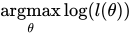
The i.i.d. hypothesis allows for a significant reduction in the number of individual cases required in the training sample, simplifying optimization calculations. In optimization problems, the assumption of independent and identical distribution simplifies the calculation of the likelihood function. Due to this assumption, the likelihood function can be expressed as:
To maximize the probability of the observed event, the log function is applied to maximize the parameter . Specifically, it computes:
where
Computers are very efficient at performing multiple additions, but not as efficient at performing multiplications. This simplification enhances computational efficiency. The log transformation, in the process of maximizing, converts many exponential functions into linear functions.
There are two main reasons why this hypothesis is practically useful with the central limit theorem (CLT):
Source: Wikipedia. Article content is retrieved live through the MediaWiki API.
Distributed R is an open source, high-performance platform for the R language. It splits tasks between multiple processing nodes to reduce execution time and analyze large data sets. Distributed R enhances R by adding distributed data structures, parallelism primitives to run functions on distributed data, a task scheduler, and multiple data loaders. It is mostly used to implement distributed versions of machine learning tasks. Distributed R is written in C++ and R, and retains the familiar look and feel of R. As of February 2015, Hewlett-Packard (HP) provides enterprise support for Distributed R with proprietary additions such as a fast data loader from the Vertica database.

In probability theory and statistics, a collection of random variables is independent and identically distributed (i.i.d., iid, or IID) if each random variable has the same probability distribution as the others and all are mutually independent. IID was first defined in statistics and finds application in many fields, such as data mining and signal processing.

Roa is a genus of butterflyfishes native to the Indian and Pacific oceans. The six species are widely distributed: R. australis near Australia, R. excelsa near Hawaii and nearby islands, R. jayakari near India, R. modesta near Japan and China, R. rumsfeldi in the Philippines, and R. haraguchiae near Japan and the Philippines.

R is a programming language for statistical computing and data visualization. It has been widely adopted in the fields of data mining, bioinformatics, data analysis, and data science. The core R language is extended by a large number of software packages, which contain reusable code, documentation, and sample data. Some of the most popular R packages are in the tidyverse collection, which enhances functionality for visualizing, transforming, and modelling data, as well as improves the ease of programming (according to the authors and users). R is free and open-source software distributed under the GNU General Public License. The language is implemented primarily in C, Fortran, and R itself. Precompiled executables are available for the major operating systems (including Linux, MacOS, and Microsoft Windows). Its core is an interpreted language with a native command line interface. In addition, multiple third-party applications are available as graphical user interfaces; such applications include RStudio (an integrated development environment), Jupyter (a notebook interface), as well as Termux and Google Colab for mobile devices.
Before the 1921 destruction of Tulsa’s Greenwood District, Black residents had created a remarkable center of business and community life. The district included stores, professional offices, entertainment venues and homes owned by Black citizens. Understanding Greenwood means learning what was built—not only what was burned.
MORE →Brown v. Board of Education in 1954.