Civil Rights
Movements, leaders, victories and the continuing fight for equality.

Explore the people, places, events, achievements, struggles and stories that shaped our journey.
Movements, leaders, victories and the continuing fight for equality.
Innovation, patents, science, technology and world-changing contributions.
Pioneers, champions, Negro Leagues, records, activism and excellence.
Meet the people whose lives, choices and achievements shaped the journey.
Black towns, communities, institutions and places where history happened.
Moments that changed communities, movements, institutions and the nation.
Katherine Johnson’s mathematical calculations helped guide some of America’s most important early space missions while she confronted the racial and gender barriers faced by Black women in twentieth-century America.
MORE →Reflects the personal views, recollections, and perspective of the author, Mike Davis.
This is a personal recollection on the Move fire on May 13, 1985
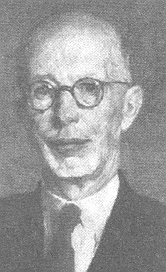
Filip Lundberg | |
|---|---|
 Lundberg in 1926 | |
| Born | 2 June 1876 |
| Died | 31 December 1965 (aged 89) |
| Education | University of Uppsala |
| Known for | A founder of mathematical risk theory, ruin theory |
| Scientific career | |
| Fields | Mathematics, Finance |
| Workplaces | De Förenade, Lif-Victoria |
Ernst Filip Oskar Lundberg (2 June 1876 – 31 December 1965) was a Swedish actuary, and mathematician. Lundberg is one of the founders of mathematical risk theory and worked as managing director of several insurance companies.
According to Harald Cramér, "Filip Lundberg's works on risk theory were all written at a time when no general theory of stochastic processes existed, and when collective reinsurance methods, in the present sense of the word, were entirely unknown to insurance companies. In both respects his ideas were far ahead of their time, and his works deserve to be generally recognized as pioneering works of fundamental importance."
Born in 1876, Filip Lundberg's father, Philip Lundberg, was a school teacher in mathematics who died just three months after Lundberg was born. Filip's first ambition was to follow his father's career in mathematics. He studied mathematics at the University of Uppsala, graduating in 1896 and receiving his Licentiate in 1898. However, instead of becoming a teacher, Filip joined a newly founded insurance company. In 1903, Lundberg went on to defend his doctoral thesis on the probability and collective risk. He soon moved to a second company where he was appointed actuary and, at the age of 28, became its managing director. From 1904 to the 1930s, Lundberg's activities were divided between his everyday life and trying to understand the relationship between the concepts 'collective' and 'risk'. Lundberg's results are described in his academic publications between the years 1909 and 1930. His major works on the ruin problem were published in 1926 and 1928. From 1910 on, he was a leading voice in debates about the life insurance industry and a prolific writer and debater. Lundberg advocated a cautious approach to the insurance business which emphasized consolidation before expansion. Lundberg went on to become a leader of the industry, managing other companies, serving as chairman of the Association of Swedish Life Insurance Companies for ten years, and sitting on government committees on insurance. Filip Lundberg left his last position within Swedish insurance, as chairman of the board of Eir, in the same year that his collective risk theory was definitively clarified. Filip Lundberg died in 1965.
In parallel to his business career, Lundberg worked on a theory of collective risk. In 1903, he finished his doctoral thesis, Approximations of the Probability Function/Reinsurance of Collective Risks. This introduced the compound Poisson process and involved work on the central limit theorem. Cramér writes that the thesis has a reputation for being impossible to understand but, that looked at now, "one cannot help being struck by his ability to deal intuitively with concepts and methods that would have to wait another thirty years before being put on a rigorous foundation." Cramér mentions later work by Andrey Kolmogorov and William Feller but it was Cramér himself who developed Lundberg's ideas on risk and linked them to the emerging theory of stochastic processes.
Focardi & Fabozzi describes Lundberg's thesis as a milestone in actuarial mathematics. It was the first to define a collective theory of risk and to apply a sophisticated probabilistic formulation to the insurance ruin problem. Lundberg’s work anticipated many future developments of probability theory, including what was later to be known as the theory of point processes. Lundberg's theory, together with that of French mathematician Louis Bachelier, was ahead of its time and inspired the subsequent development of probability theory. But the type of mathematics implied by his work could not be employed completely until the development of digital computers.
Because he published many of his major works in Swedish, Lundberg's work went unnoticed by the actuarial community for nearly 30 years. However, eventually Lundberg's ideas became known largely through the work of Cramér and his students. Although Lundberg published some work in German, the international scientific language of the time, Lundberg's thesis and most of his subsequent writings were in Swedish. His mathematical language did not travel easily, either.
| International | |
|---|---|
| Academics | |
Source: Wikipedia. Article content is retrieved live through the MediaWiki API.

Ernst Filip Oskar Lundberg (2 June 1876 – 31 December 1965) was a Swedish actuary, and mathematician. Lundberg is one of the founders of mathematical risk theory and worked as managing director of several insurance companies. According to Harald Cramér, "Filip Lundberg's works on risk theory were all written at a time when no general theory of stochastic processes existed, and when collective reinsurance methods, in the present sense of the word, were entirely unknown to insurance companies. In both respects his ideas were far ahead of their time, and his works deserve to be generally recognized as pioneering works of fundamental importance."
Erik Filip Lundberg (13 August 1907 – 14 September 1987) was a Swedish economist, born in Stockholm. He was a professor of political economics at Stockholm University and a member of the Stockholm School of economic thought. He was president of the International Economic Association from 1968 to 1971. From 1969 to 1979, he was a member of the committee that selected the laureates for the Sveriges Riksbank Prize in Economic Sciences, the Economics Prize Committee, and served as the committee's chairman from 1975 to 1979. Erik Lundberg was the son of mathematician Filip Lundberg Ph.D. (1876–1965) and Astrid Bergstedt. In 1931–1933 he studied in the United States as Rockefeller Scholar, after his associate degree at Stockholm University, and when he returned to Sweden he received a post at the Riksbank's economic secretariat. In 1934 he was economic planning committee financial advisor in Iceland. He took his doctorate in 1937 with studies in the theory of economic expansion, and in the same year received employment at the Institute of Economic Research, where he became head in 1944. He was one of Finance Minister Ernst Wigforss' closest advisers and at about the same time was appointed the first professor of economics at Stockholm University, a position he held from 1946 to 1965. He was also expert in various state investigations in the 1930s and 1940s. In 1933–1935 Lundberg, Ingvar Svennilson and Gösta Bagge published Wages in Sweden 1860–1930 I-II. In his doctoral thesis Lundberg developed the economic theory which Keynes presented in the Treatise of Money, and attempted, mainly by Knut Wicksell's work, to combine it with a dynamic aspect, and launched a business cycle and a non-equilibrium theory. In other works he investigated investments dual roles of demand and supply, and stated that this could lead to an imbalance in growth. His early work studied how the economy is affected by export and import. In Produktivitet och räntabilitet (The productivity and return on investments) in 1961 he coined the phrase "The Horndalseffect" to describe an increase in productivity without investment. In the 1980s, his research focused on the economic crisis and the influence on politics of the major economists of the 1900s.
Lundberg is a surname.
Filip Beckman (born 10 February 2003) is a Swedish footballer who plays as a central defender for GAIS in Allsvenskan. Beckman hails from Kungsbacka and started his youth career in Kungsbacka IF. He played team handball until he was 14, and his brother Melwin Beckman became a handballer. Filip Beckman spent time in the PR Academy before moving to Gothenburg club BK Häcken. He did not progress past the U16 team in Häcken, and via Tölö IF he moved to the academy of another Gothenburg club GAIS. He was an unused substitute for Tölö's senior team in Division 4. Beckman was drafted into the senior squad ahead of the 2023 season. He made his senior debut in a Gothenburg derby against IFK Göteborg in February 2023, in the 2022–23 Svenska Cupen. Contributing to GAIS' campaign in the 2023 Superettan, Beckman scored his first Superettan goal in May 2023. It was a decisive goal away against Östers IF, 6 minutes into stoppage time. As GAIS won promotion to the Allsvenskan, Beckman was one of GAIS' several strong options in central defence, together with Axel Norén, Anes Čardaklija and Robin Frej. Beckman did not start any game until July 2024, when concussions on two of his teammates led to his first start. Four weeks later, in August 2024 Beckman scored his first Allsvenskan goal. Beckman finished the 2024 Allsvenskan campaign as a team regular.
Before the 1921 destruction of Tulsa’s Greenwood District, Black residents had created a remarkable center of business and community life. The district included stores, professional offices, entertainment venues and homes owned by Black citizens. Understanding Greenwood means learning what was built—not only what was burned.
MORE →Mae Jemison, aboard Space Shuttle Endeavour in 1992.