q2K BHP
Black History Portal
THE BHP WIRE —
HIDDEN TRUTHS
What's New!
THE JOURNEY THROUGH TIME

Explore Black History

Explore the people, places, events, achievements, struggles and stories that shaped our journey.

✊🏾

Civil Rights

Movements, leaders, victories and the continuing fight for equality.

⚙️

Black Inventors

Innovation, patents, science, technology and world-changing contributions.

🏆

Sports

Pioneers, champions, Negro Leagues, records, activism and excellence.

♟️

People

Meet the people whose lives, choices and achievements shaped the journey.

📍

Places

Black towns, communities, institutions and places where history happened.

📜

Events

Moments that changed communities, movements, institutions and the nation.

Enter a person, place, event, or topic.
MY'STORY

The MOVE Fire

This is a personal recollection on the Move fire on May 13, 1985 Philadelphia police fired thousands of rounds at the MOVE house, city officials approved dropping an explosive device on the roof, the resulting fire was allowed to burn, 11 people—including five children—died, and 61 homes were destroyed. Philadelphia City Council later called it a “brutal attack carried out by the City of Philadelphia on its own citizens” and acknowledged that no individual faced criminal consequences for the bombing. One timeline correction worth preserving for the BHP record: the major previous MOVE-police confrontation was August 8, 1978, about seven years before the bombing, not a year or two earlier. Officer James Ramp was killed, other police and firefighters were wounded, nine MOVE members were later convicted, and television cameras recorded police beating Delbert Africa during his arrest. The 1985 MOVE Commission later specifically criticized city planners for failing to adequately use lessons from that 1978 confrontation. And that actually strengthens the point you’re making: 1985 did not happen without precedent or institutional memory. There had already been a deadly confrontation with MOVE, years of conflict, negotiations and police involvement before Osage Avenue.

MORE →
BLACK FACTS
The Truths They Never Taught You...

Shirley Chisholm — Unbought and Unbossed

In 1968 Shirley Chisholm became the first Black woman elected to the United States Congress. In 1972 she launched a campaign for the Democratic presidential nomination, breaking another political barrier.

MORE →
BHP gathered finds from its connected research sources. Showing the 9 strongest Black History matches.
← BACK TO RESULTS
NMAAHC

Negro Slain in Tulsa Riot, June 1-1921

Date
1921
Created by
Caption
On May 31 and June 1, 1921, in Tulsa, Oklahoma, mobs of white residents brutally attacked the African American community of Greenwood, colloquially known as "Black Wall Street," in the deadliest racial massacre in U.S. history. This unidentified individual was just one of the many victims. The Oklahoma Bureau of Vital Statistics recorded the official death toll as 36, but it is now believed it may have been as high as 300 dead with many more missing and wounded.
Photo postcards of the Tulsa Race Massacre were widely distributed following the massacre in 1921. Like postcards depicting lynchings, these souvenir cards were powerful declarations of white racial power and control. Decades later, the cards served as evidence for community members working to recover the forgotten history of the riot and secure justice for its victims and their descendants.
Description
A sepia-toned photographic postcard depicting the body of an unidentified victim of the Tulsa Race Massacre. The image shows the body lying in the middle of the street, with newspapers covering the face. A man stands at left, looking down at the body. In the background is a damaged car, debris, and destroyed buildings. Across the bottom of the image, written into the negative and appearing as white text is [NEGRO SLAIN IN TULSA RIOT JUNE-1-1921]. The verso is marked [POST CARD] at the top with spaces for [CORRESPONDENCE] and [ADDRESS] and an AZO stamp box in the top right corner.
See more items in
National Museum of African American History and Culture Collection
Classification
Photographs and Still Images
Credit Line
Collection of the Smithsonian National Museum of African American History and Culture
Data Source
National Museum of African American History and Culture
Object number
2011.175.6
Type
gelatin silver prints
photographic postcards
Restrictions & Rights
Public domain
Proper usage is the responsibility of the user.
Medium
silver and photographic gelatin on photographic paper, with ink on paper
Dimensions
H x W: 3 7/16 × 5 7/16 in. (8.7 × 13.8 cm)
Title
Title • Negro Slain in Tulsa Riot, June 1-1921
Record ID
nmaahc_2011.175.6
Museum
NMAAHC
Title Sort
NEGRO SLAIN IN TULSA RIOT, JUNE 1-1921
Source
National Museum of African American History and Culture
Metadata Usage
CC0
Date
1920s
Geo Location
City • Tulsa • County • Tulsa County • State • Oklahoma • Country • United States • Continent • North and Central America
Online Media Type
Images
Online Media Rights
No Known Copyright Restrictions

Source: National Museum of African American History and Culture, Smithsonian Institution. Rights and restrictions shown above are supplied by the Smithsonian record.
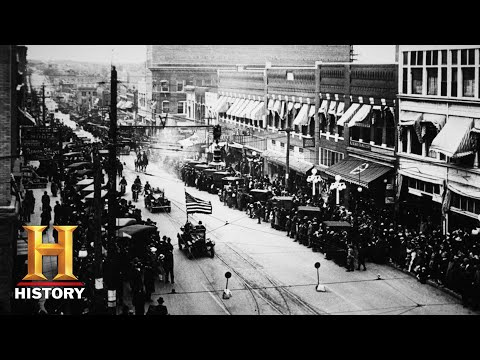
YouTube

Black Wall Street Established in Tulsa, Oklahoma | Tulsa Burning: The 1921 Race Massacre | History

Date: 2021-05-31T16:00:22Z

Located in Tulsa, Oklahoma, this residential neighborhood known as Greenwood provided an opportunity for Blacks to ...

MORE →
National Archives

Massachusetts MPS House at 118 Greenwood Street

Date: 63791288

This resource is located in Middlesex County, Massachusetts. Areas of significance include: Architecture. Architectural classifications include: Stick Style. The National Historic Places Register Reference Number is 89000702.

MORE →
National Archives

Georgia MPS North Wall Street Historic District

Date: 93205848

This resource is located in Bartow County, Georgia. Areas of significance include: Architecture; Commerce; Transportation. Architectural classifications include: Renaissance; Commercial Victorian Vernacular; 20th Century Commercial; Stripped Classical. The National Historic Places Register Reference Number is 98000249.

MORE →
National Archives

Mississippi MPS Greenwood MRA

Date: 73890244

This resource is located in Leflore County, Mississippi. Areas of significance include: Architecture; Agriculture; Exploration/Settlement; Ethnic Heritage: Black History; Industry; . The National Historic Places Register Reference Number is 64000408.

MORE →
National Archives

Kansas SP Greenwood Hotel

Date: 123863995

This resource is located in Greenwood County, Kansas. Areas of significance include: Commerce. Architectural classifications include: Spanish Colonial Revival. The National Historic Places Register Reference Number is 06000769.

MORE →
NMAAHC

National Guards - Taking Negros to Ball Park for Protection

Date: Date

Caption

MORE →
No preview image
NMAAHC

Photograph of the body of a man killed in the Tulsa Race Massacre

Date: Date

Caption

MORE →
No preview image
NMAAHC

Negro Slain in Tulsa Riot, June 1-1921

Date: Date

Caption

MORE →
No preview image
NMAAHC

A Victim of Tulsa Race Riot, 6-1-21

Date: Date

Caption

MORE →
TOPIC OF THE DAY

Greenwood / Black Wall Street

Before the 1921 destruction of Tulsa’s Greenwood District, Black residents had created a remarkable center of business and community life. The district included stores, professional offices, entertainment venues and homes owned by Black citizens. Understanding Greenwood means learning what was built—not only what was burned.

MORE →
TRIVIA QUESTION OF THE DAY

What prosperous Tulsa district became widely known as “Black Wall Street”?

The Greenwood District.