Civil Rights
Movements, leaders, victories and the continuing fight for equality.

Explore the people, places, events, achievements, struggles and stories that shaped our journey.
Movements, leaders, victories and the continuing fight for equality.
Innovation, patents, science, technology and world-changing contributions.
Pioneers, champions, Negro Leagues, records, activism and excellence.
Meet the people whose lives, choices and achievements shaped the journey.
Black towns, communities, institutions and places where history happened.
Moments that changed communities, movements, institutions and the nation.
In 1968 Shirley Chisholm became the first Black woman elected to the United States Congress. In 1972 she launched a campaign for the Democratic presidential nomination, breaking another political barrier.
MORE →Reflects the personal views, recollections, and perspective of the author, Mike Davis.
This is a personal recollection on the Move fire on May 13, 1985
 | This article has multiple issues. Please help improve it or discuss these issues on the talk page. (Learn how and when to remove these messages)
|
In statistics, the concept of being an invariant estimator is a criterion that can be used to compare the properties of different estimators for the same quantity. It is a way of formalising the idea that an estimator should have certain intuitively appealing qualities. Strictly speaking, "invariant" would mean that the estimates themselves are unchanged when both the measurements and the parameters are transformed in a compatible way, but the meaning has been extended to allow the estimates to change in appropriate ways with such transformations.[1] The term equivariant estimator is used in formal mathematical contexts that include a precise description of the relation of the way the estimator changes in response to changes to the dataset and parameterisation: this corresponds to the use of "equivariance" in more general mathematics.
In statistical inference, there are several approaches to estimation theory that can be used to decide immediately what estimators should be used according to those approaches. For example, ideas from Bayesian inference would lead directly to Bayesian estimators. Similarly, the theory of classical statistical inference can sometimes lead to strong conclusions about what estimator should be used. However, the usefulness of these theories depends on having a fully prescribed statistical model and may also depend on having a relevant loss function to determine the estimator. Thus a Bayesian analysis might be undertaken, leading to a posterior distribution for relevant parameters, but the use of a specific utility or loss function may be unclear. Ideas of invariance can then be applied to the task of summarising the posterior distribution. In other cases, statistical analyses are undertaken without a fully defined statistical model or the classical theory of statistical inference cannot be readily applied because the family of models being considered are not amenable to such treatment. In addition to these cases where general theory does not prescribe an estimator, the concept of invariance of an estimator can be applied when seeking estimators of alternative forms, either for the sake of simplicity of application of the estimator or so that the estimator is robust.
The concept of invariance is sometimes used on its own as a way of choosing between estimators, but this is not necessarily definitive. For example, a requirement of invariance may be incompatible with the requirement that the estimator be mean-unbiased; on the other hand, the criterion of median-unbiasedness is defined in terms of the estimator's sampling distribution and so is invariant under many transformations.
One use of the concept of invariance is where a class or family of estimators is proposed and a particular formulation must be selected amongst these. One procedure is to impose relevant invariance properties and then to find the formulation within this class that has the best properties, leading to what is called the optimal invariant estimator.
There are several types of transformations that are usefully considered when dealing with invariant estimators. Each gives rise to a class of estimators which are invariant to those particular types of transformation.
The combination of permutation invariance and location invariance for estimating a location parameter from an independent and identically distributed dataset using a weighted average implies that the weights should be identical and sum to one. Of course, estimators other than a weighted average may be preferable.
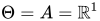
Under this setting, we are given a set of measurements which contains information about an unknown parameter . The measurements are modelled as a vector random variable having a probability density function which depends on a parameter vector .
The problem is to estimate given . The estimate, denoted by , is a function of the measurements and belongs to a set . The quality of the result is defined by a loss function which determines a risk function . The sets of possible values of , , and are denoted by , , and , respectively.
In statistical classification, the rule which assigns a class to a new data-item can be considered to be a special type of estimator. A number of invariance-type considerations can be brought to bear in formulating prior knowledge for pattern recognition.
An invariant estimator is an estimator which obeys the following two rules:[citation needed]
To define an invariant or equivariant estimator formally, some definitions related to groups of transformations are needed first. Let denote the set of possible data-samples. A group of transformations of , to be denoted by , is a set of (measurable) 1:1 and onto transformations of into itself, which satisfies the following conditions:
Datasets and in are equivalent if for some . All the equivalent points form an equivalence class. Such an equivalence class is called an orbit (in ). The orbit, , is the set . If consists of a single orbit then is said to be transitive.
A family of densities is said to be invariant under the group if, for every and there exists a unique such that has density . will be denoted .
If is invariant under the group then the loss function is said to be invariant under if for every and there exists an such that for all . The transformed value will be denoted by .
In the above, is a group of transformations from to itself and is a group of transformations from to itself.
An estimation problem is invariant(equivariant) under if there exist three groups as defined above.
For an estimation problem that is invariant under , estimator is an invariant estimator under if, for all and ,
For a given problem, the invariant estimator with the lowest risk is termed the "best invariant estimator". Best invariant estimator cannot always be achieved. A special case for which it can be achieved is the case when is transitive.
Suppose is a location parameter if the density of is of the form . For and , the problem is invariant under . The invariant estimator in this case must satisfy
thus it is of the form (). is transitive on so the risk does not vary with : that is, . The best invariant estimator is the one that brings the risk to minimum.
In the case that L is the squared error
The estimation problem is that has density , where θ is a parameter to be estimated, and where the loss function is . This problem is invariant with the following (additive) transformation groups:
The best invariant estimator is the one that minimizes
and this is Pitman's estimator (1939).
For the squared error loss case, the result is
If (i.e. a multivariate normal distribution with independent, unit-variance components) then
If (independent components having a Cauchy distribution with scale parameter σ) then ,. However the result is
with
Source: Wikipedia. Article content is retrieved live through the MediaWiki API.
In statistics, the concept of being an invariant estimator is a criterion that can be used to compare the properties of different estimators for the same quantity. It is a way of formalising the idea that an estimator should have certain intuitively appealing qualities. Strictly speaking, "invariant" would mean that the estimates themselves are unchanged when both the measurements and the parameters are transformed in a compatible way, but the meaning has been extended to allow the estimates to change in appropriate ways with such transformations. The term equivariant estimator is used in formal mathematical contexts that include a precise description of the relation of the way the estimator changes in response to changes to the dataset and parameterisation: this corresponds to the use of "equivariance" in more general mathematics.
In mathematics, equivariance is a form of symmetry for functions from one space with symmetry to another (such as symmetric spaces). A function is said to be an equivariant map when its domain and codomain are acted on by the same symmetry group, and when the function commutes with the action of the group. That is, applying a symmetry transformation and then computing the function produces the same result as computing the function and then applying the transformation. Equivariant maps generalize the concept of invariants, functions whose value is unchanged by a symmetry transformation of their argument. The value of an equivariant map is often (imprecisely) called an invariant. In statistical inference, equivariance under statistical transformations of data is an important property of various estimation methods; see invariant estimator for details. In pure mathematics, equivariance is a central object of study in equivariant topology and its subtopics equivariant cohomology and equivariant stable homotopy theory.
In statistics, a fixed effects model is a statistical model in which the model parameters are fixed or non-random quantities. This is in contrast to random effects models and mixed models in which all or some of the model parameters are random variables. In many applications including econometrics and biostatistics a fixed effects model refers to a regression model in which the group means are fixed (non-random) as opposed to a random effects model in which the group means are a random sample from a population. Generally, data can be grouped according to several observed factors. The group means could be modeled as fixed or random effects for each grouping. In a fixed effects model each group mean is a group-specific fixed quantity. In panel data where longitudinal observations exist for the same subject, fixed effects represent the subject-specific means. In panel data analysis the term fixed effects estimator (also known as the within estimator) is used to refer to an estimator for the coefficients in the regression model including those fixed effects (one time-invariant intercept for each subject).

In mathematics, an invariant is a property of a mathematical object (or a class of mathematical objects) which remains unchanged after operations or transformations of a certain type are applied to the objects. The particular class of objects and type of transformations are usually indicated by the context in which the term is used. For example, the area of a triangle is an invariant with respect to isometries of the Euclidean plane. The phrases "invariant under" and "invariant to" a transformation are both used. More generally, an invariant with respect to an equivalence relation is a property that is constant on each equivalence class. Invariants are used in diverse areas of mathematics such as geometry, topology, algebra and discrete mathematics. Some important classes of transformations are defined by an invariant they leave unchanged. For example, conformal maps are defined as transformations of the plane that preserve angles. The discovery of invariants is an important step in the process of classifying mathematical objects.
Before the 1921 destruction of Tulsa’s Greenwood District, Black residents had created a remarkable center of business and community life. The district included stores, professional offices, entertainment venues and homes owned by Black citizens. Understanding Greenwood means learning what was built—not only what was burned.
MORE →Joe Louis.