Civil Rights
Movements, leaders, victories and the continuing fight for equality.

Explore the people, places, events, achievements, struggles and stories that shaped our journey.
Movements, leaders, victories and the continuing fight for equality.
Innovation, patents, science, technology and world-changing contributions.
Pioneers, champions, Negro Leagues, records, activism and excellence.
Meet the people whose lives, choices and achievements shaped the journey.
Black towns, communities, institutions and places where history happened.
Moments that changed communities, movements, institutions and the nation.
Mansa Musa was the ruler of the Mali Empire in West Africa. Details recorded here should be sourced; unknown information is left blank.
MORE →Reflects the personal views, recollections, and perspective of the author, Mike Davis.
This is a personal recollection on the Move fire on May 13, 1985
| Kadamba script | |
|---|---|
 | |
| Script type | |
Period | 4–7th century CE[1] |
| Direction | Left-to-right  |
| Languages | Old Kannada Old Telugu Sanskrit Konkani |
| Related scripts | |
Parent systems | |
Child systems | Kannada-Telugu alphabet, Goykanadi,[2] Pyu script[3] |
| Brahmic scripts |
|---|
| The Brahmi script and its descendants |
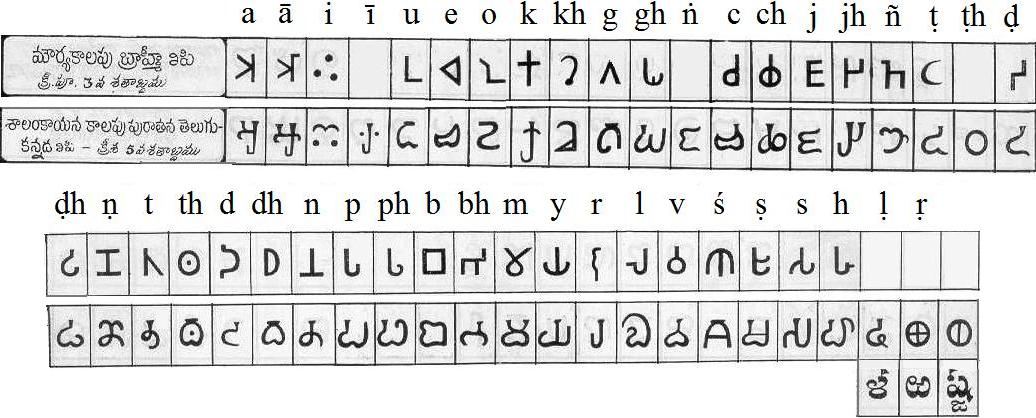
The Kadamba script is the first writing system devised specifically for writing Kannada, along with sanskrit and later adopted to write Telugu language.[4] The Kadamba script is also known to be precursor to both Kannada and telugu scripts.
The Kadamba script is one of the oldest scripts of the southern group of writing systems that developed from the ancient Brahmi script. By the 5th century CE it became distinct from other Brahmi variants and was used in what are now the South Indian states of Karnataka, Telangana and Andhra Pradesh. It evolved into the Kannada-Telugu script by the 10th century CE and was used to write the Kannada and Telugu languages.[5] It is also distantly related to the Sinhala script.[6]
During the rule of Kadamba dynasty (325-550), major change in the Brahmi script resulted in the Kadamba script, letters were shorter and round in shape. During (325 to 1000 AD) the rule of the Western Ganga dynasty in the southern parts of Karnataka the Kannada script used differently (also known as Ganga script) in rock edicts and copper plate inscriptions. During 6th to 10th century, the Telugu-Kannada alphabet stabilized during the rule of the Chalukyas of Badami, chalukyas of vengi and Rastrakutas from 500-1000[7].[citation needed]


The Kadamba script shares similarities with scripts of certain languages belonging to the alphasyllabary or abugida family, including Goykanadi, Bhattiprolu script, Salankayana script,[11] Pallava script, Gupta script,[12] as well as its descendent, the Kannada script. [citation needed][original research?]

Source: Wikipedia. Article content is retrieved live through the MediaWiki API.

The Kadamba script is the first writing system devised specifically for writing Kannada, along with sanskrit and later adopted to write Telugu language. The Kadamba script is also known to be precursor to both Kannada and telugu scripts. The Kadamba script is one of the oldest scripts of the southern group of writing systems that developed from the ancient Brahmi script. By the 5th century CE it became distinct from other Brahmi variants and was used in what are now the South Indian states of Karnataka, Telangana and Andhra Pradesh. It evolved into the Kannada-Telugu script by the 10th century CE and was used to write the Kannada and Telugu languages. It is also distantly related to the Sinhala script.

The Kannada script (IAST: Kannaḍa lipi; obsolete: Kanarese or Canarese script in English) is an abugida of the Brahmic family, used to write Kannada, one of the Dravidian languages of South India especially in the state of Karnataka. It is one of the official scripts of the Indian Republic. Kannada script is also widely used for writing Sanskrit texts in Karnataka. Several minor languages, such as Tulu, Konkani, Kodava, Beary and Sanketi also use alphabets based on the Kannada script. The Kannada and Telugu scripts share very high mutual intellegibility with each other, and are often considered to be regional variants of single script. Other scripts similar to Kannada script are Sinhala script (which included some elements from the Kadamba script), and Old Peguan script (used in Burma). The Kannada script (ಅಕ್ಷರಮಾಲೆ akṣaramāle or ವರ್ಣಮಾಲೆ varṇamāle) is a phonemic abugida of forty-nine letters. The character set is almost identical to that of other Brahmic scripts or often known as Brahmi Lipi. Consonantal letters imply an inherent vowel. Letters representing consonants are combined to form digraphs (ಒತ್ತಕ್ಷರ ottakṣara) when there is no intervening vowel. Otherwise, each letter corresponds to a syllable. The letters are classified into three categories: ಸ್ವರ svara (vowels), ವ್ಯಂಜನ vyañjana (consonants), and ಯೋಗವಾಹಕ yōgavāhaka (semiconsonants). The Kannada words for a letter of the script are ಅಕ್ಷರ akshara, ಅಕ್ಕರ akkara, and ವರ್ಣ varṇa. Each letter has its own form (ಆಕಾರ ākāra) and sound (ಶಬ್ದ śabda), providing the visible and audible representations, respectively. Kannada is written from left to right.

The Pyu script is a writing system used to write the Pyu language, an extinct Sino-Tibetan language that was mainly spoken in present-day central Burma. It was based on the Brahmi-based scripts of both north and south India. The best available evidence suggests that the Pyu script gradually developed between the 2nd and 6th centuries CE. The Pyu script's immediate precursor appears to be the Kadamba script of southwest India. The early period Pyu inscriptions always included interlinear Brahmi scripts. It was not until the 7th and 8th centuries that Sri Ksetra's inscriptions appeared all in the Pyu script, without any interlinear Brahmi. Many of the important inscriptions were written in Sanskrit and Pali, alongside the Pyu script. The Pyu sites have yielded a wide variety of Indian scripts ranging from Ashokan Brahmi script and Tamil Brahmi script, both dated to the 3rd and 2nd centuries BCE, to the Gupta script and Kadamba script dated to the 4th to 6th centuries CE. The Pyu script is presently not in Unicode. Its inclusion was proposed in 2010, and has tentative placement in the Unicode Consortium's roadmap.

The Halmidi inscription is the oldest known Kannada-language inscription in the Kadamba script. While estimates vary slightly, the inscription is often dated to between 450 CE - 500 CE. The inscription was discovered in 1936 by Dr. M. H. Krishna, the Director of Archaeology of the (princely) State of Mysore (present-day Karnataka region of India), in Halmidi, a village in the Hassan district. The original inscription is kept in the Office of the Director of Archaeology and Museums, Govt. of Karnataka, Mysore, and a fibreglass replica has been installed in Halmidi.
Before the 1921 destruction of Tulsa’s Greenwood District, Black residents had created a remarkable center of business and community life. The district included stores, professional offices, entertainment venues and homes owned by Black citizens. Understanding Greenwood means learning what was built—not only what was burned.
MORE →Mae Jemison, aboard Space Shuttle Endeavour in 1992.