Civil Rights
Movements, leaders, victories and the continuing fight for equality.

Explore the people, places, events, achievements, struggles and stories that shaped our journey.
Movements, leaders, victories and the continuing fight for equality.
Innovation, patents, science, technology and world-changing contributions.
Pioneers, champions, Negro Leagues, records, activism and excellence.
Meet the people whose lives, choices and achievements shaped the journey.
Black towns, communities, institutions and places where history happened.
Moments that changed communities, movements, institutions and the nation.
In 1968 Shirley Chisholm became the first Black woman elected to the United States Congress. In 1972 she launched a campaign for the Democratic presidential nomination, breaking another political barrier.
MORE →Reflects the personal views, recollections, and perspective of the author, Mike Davis.
This is a personal recollection on the Move fire on May 13, 1985
The Springfield race riot of 1908 was an act of mass racial violence committed against African Americans by a mob of white Americans and European immigrants in Springfield, Illinois, between August 14 and 16, 1908. The riot was caused by the accusations and arrest of two black men, Joe James and George Richardson. James was accused of murdering Clergy Ballard and attempting to rape his daughter, Blanche, in a home invasion. Richardson was accused of raping Mabel Hallam. The police and white residents used scant evidence to back these accusations. A mob of mostly white residents gathered at Sangamon County Jail, demanding the release of James and Richardson, so they could lynch them. Sheriff Werner staged a distraction, while Harry Loper drove James and Richardson to McLean County Jail for their own safety. After the crowd learned that Loper and Werner arranged the suspects' transfer, they proceeded to riot in "the Levee" and "the Badlands" area. In the immediate aftermath, 17 people died (including two who died of suicide), an unknown number injured, property damage amounted to $150,000 (approximately $5 million in 2024), and 2,000 black residents left the city. In the wake of the riot, Richardson would be released after authorities concluded the alleged rapist had a sexually transmitted infection and found no such disease on Richardson. James would be hanged at the Sangamon County Jail after proven guilty by an all-white jury on October 23, 1908. Approximately 150 mob participants were arrested, though few would ever be convicted. One notable example would be Abraham Raymer, who was convicted of petty larceny. Spending only 30 days in jail and paying a $25 fine.

The Springfield race riot of 1908 consisted of events of mass racial violence committed against African Americans by a mob of about 5,000 white Americans and European immigrants in Springfield, Illinois, between August 14 and 16, 1908. Two black men, Joe James and George Richardson, had been arrested. James was accused of murdering a white man and attempting to rape his daughter, and Richardson was accused of raping a white woman, Mabel Hallam. When the sheriff had transferred the two suspects out of the city, white people began attacking black neighborhoods, killing black citizens, and destroyed black businesses and homes. The state militia was called out to quell the rioting. At least 17 people died, including two who died by suicide. It was misreported for decades that only militia were responsible for white deaths and that more whites than black people had died. Personal and property damages, suffered overwhelmingly by black people, amounted to more than $150,000 (approximately $5 million in 2024), as dozens of black homes and businesses were destroyed, as well as three white-owned businesses. As a result of the rioting, numerous black people left Springfield, but it is unclear how many moved away permanently. Although in the following months over 100 riot-related indictments were issued and some pleaded guilty to minor violations, only one alleged rioter went to trial and was convicted for lesser offenses. Of the two accused black men, who were the initial focus of the lynch mob, James was eventually tried, convicted, and hanged; Richardson was set free. Hallam admitted that she had lied to cover up an assault by her husband after he found out she was having an affair. The riot was a catalyst for the formation of the National Association for the Advancement of Colored People (NAACP), which was organized to work on civil rights for African Americans. Near the 100th anniversary in 2008, the City of Springfield erected historical markers and a memorial statue. Part of the site of the riots was established as the Springfield 1908 Race Riot National Monument in 2024.

William English Walling (March 18, 1877 – September 12, 1936) (known as "English" to friends and family) was an American labor reformer and Socialist Republican born into a wealthy family in Louisville, Kentucky. He founded the National Women's Trade Union League in 1903. Moved by his investigation of the Springfield Race Riot of 1908 in the state capital of Illinois, he was among the co-founders of the National Association for the Advancement of Colored People (NAACP) in 1909. He wrote three books on socialism in the early 20th century. He left the Socialist Party because of its anti-war policy, as he believed United States participation in the Great War was needed to defeat the Central Powers.
Description
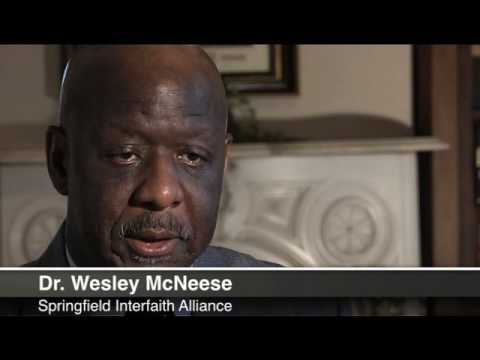
For more news videos, check out www.wsj.com/video. A race riot in Springfield, Ill., in 1908, caused a deep rift in the community.

The Omaha Race Riot occurred in Omaha, Nebraska, September 28–29, 1919. The race riot resulted in the lynching of Will Brown, a black civilian; the death of two white rioters; the injuries of many Omaha Police Department officers and civilians, including the attempted hanging of Mayor Edward Parsons Smith; and a public rampage by thousands of white rioters who set fire to the Douglas County Courthouse in downtown Omaha. It followed more than 20 race riots that occurred in major industrial cities and certain rural areas of the United States during the Red Summer of 1919.
Caption
Description
Description
Before the 1921 destruction of Tulsa’s Greenwood District, Black residents had created a remarkable center of business and community life. The district included stores, professional offices, entertainment venues and homes owned by Black citizens. Understanding Greenwood means learning what was built—not only what was burned.
MORE →Madam C.J. Walker